Botox: When to Start, What to Expect and How Long It Lasts
Everything you need to know about botulinum toxin: the ideal age to start, what the procedure is like, how long the effect lasts and what preventive Botox is.
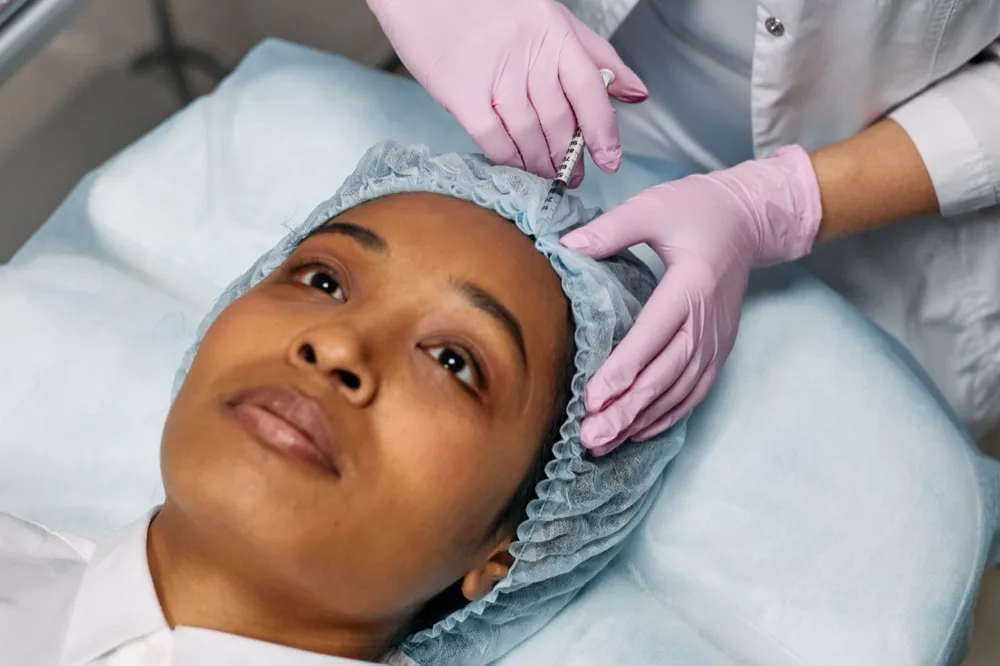
Botulinum toxin, popularly known as Botox, is one of the most requested aesthetic treatments in the world and, when performed by expert hands, one of the safest and most effective for facial rejuvenation. Dr. Téllez answers her patients' most frequently asked questions.
What is Botox and how does it work?
Botulinum toxin is a purified protein produced by the bacterium Clostridium botulinum. In controlled medical and aesthetic doses, it works by temporarily blocking the nerve signal that tells the muscle to contract. As a result, the muscle relaxes and the expression lines caused by that contraction soften or disappear.
It does not change the skin's sensitivity or remove your ability to express yourself when applied in appropriate doses by a certified professional.
Where can Botox be applied?
The most common areas are:
- Forehead: horizontal lines when raising the eyebrows
- Between the brows (glabella): vertical lines or "11s"
- Crow's feet: lines at the outer corners of the eyes
- Nose: lines on the bridge of the nose ("bunny lines")
- Lips: for a lip flip effect or to reduce vertical lines around the mouth
- Neck: platysmal bands
- Excessive sweating (hyperhidrosis): underarms, hands, feet
- Migraine and bruxism: therapeutic application in the jaw muscles
At what age is it advisable to start?
There is no fixed age, because the indication depends on when the lines start to appear and how deep they are. As a general guide, however:
- Ages 25–30: many patients start preventive Botox when lines begin to appear but are not yet deep
- Ages 30–40: most patients look for Botox when the lines are visible at rest
- 40+: Botox is still effective; it can be complemented with fillers and other treatments for a more complete result
What is preventive Botox?
Preventive Botox means applying small doses at a younger age (25–30) to keep expression lines from deepening into static wrinkles (visible even when the muscle isn't moving). Clinical evidence supports its preventive use when indicated.
What is the procedure like?
At Dr. Téllez's office, the procedure follows these steps:
- Facial assessment: analysis of the muscles, proportions and asymmetries
- Personalized design: defining exactly which muscles to treat and at what dose
- Cleansing and local cooling for greater comfort
- Injection: multiple tiny pricks with very fine needles (almost painless)
- Immediate evaluation: review of the result and symmetry
The procedure takes 20 to 40 minutes and you can return to your activities immediately.
When are results visible?
The effect starts to show 48 to 72 hours after the procedure and peaks between 7 and 14 days. That's why Dr. Téllez schedules a follow-up at 2 weeks to evaluate the result and adjust if needed.
How long does Botox last?
On average, Botox lasts 4 to 6 months. Factors that influence this:
- Metabolism: people who are more physically active tend to metabolize it faster
- Treated area: some areas last longer than others
- Dose: higher doses can extend the effect
- Treatment frequency: with regular treatments, the effect tends to last longer over time because the muscles develop some disuse atrophy
Aftercare
- Do not touch or massage the treated area for the first 4–6 hours
- Avoid intense physical activity the same day
- Avoid excessive heat (sauna, steam room) for 24 hours
- Sleep on your back the first night
- Do not drink alcohol on the day of the procedure
- Do not have facial massages or laser treatments in the following 15 days
Is Botox safe?
Yes, when performed by a certified dermatologist using products registered with INVIMA (Colombia's drug regulator). Side effects are rare, mild and temporary: there may be slight redness or a bruise at the injection site that resolves within a few days.
Contraindications: pregnancy, breastfeeding, neuromuscular diseases (myasthenia gravis, ALS), allergy to the product's components or an active infection in the area to be treated.
Will Botox leave my face expressionless?
This is the most common concern. Well-applied Botox does not paralyze the face or remove expressiveness. The goal is to soften expression lines while keeping natural movement. The key lies in the technique, the dose and the clinical judgment of the person applying it.
Book a facial assessment consultation with Dr. Téllez to find out whether Botox is the right treatment for you.
