Retinoids: A Complete Guide to Getting Started Without Irritating Your Skin
What retinoids are, the differences between retinol, retinaldehyde and tretinoin, how to introduce them into your routine and how to avoid irritation. Dr. Alejandra Téllez, Bogotá.
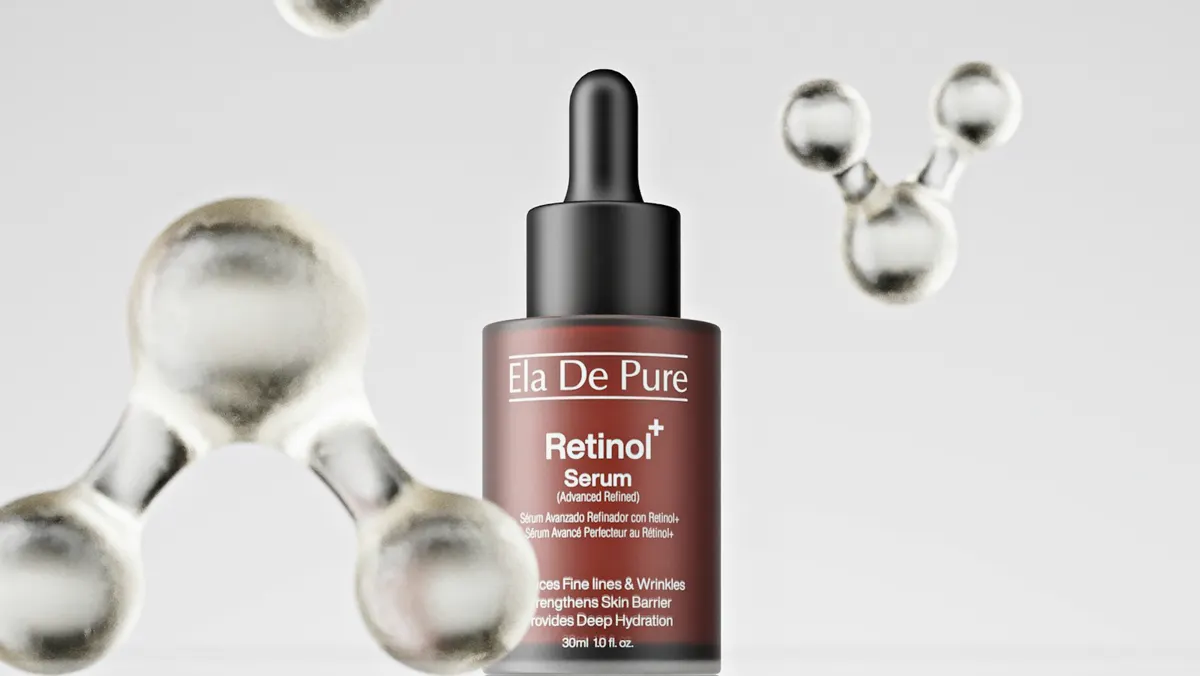
If there's one ingredient that scientific evidence consistently supports for skin aging and acne, it's the retinoid. It is also, without a doubt, the one that causes the most questions and frustration when it isn't used correctly. This guide sums up what I explain in my office every time someone starts using retinoids.
What are retinoids?
Retinoids are derivatives of vitamin A. They work by speeding up cell turnover, stimulating collagen production and regulating sebaceous gland activity. That's why they are useful both for aging (fine lines, texture, dark spots) and for acne.
Not all retinoids are the same: they differ in strength, speed of action and how much irritation they cause.
Types of retinoids, from gentlest to strongest
Retinol
The most common in over-the-counter products (cosmetics, no prescription needed). It must be converted twice inside the skin before becoming active, so it is gentler and slower to show results (8–12 weeks). A good starting point for skin with no previous experience.
Retinaldehyde (retinal)
An intermediate step: it needs only one conversion, so it is stronger than retinol but better tolerated than tretinoin. It is increasingly common in quality skincare.
Tretinoin (retinoic acid)
This is the active form, for medical use (compounded formula or prescription medication). It needs no conversion and acts directly. It is the most studied and effective, but also the one most likely to cause irritation at the start.
Adapalene
A synthetic retinoid, available without a prescription in some concentrations. Especially indicated for acne, with a good tolerability profile.
Other medical retinoids
Tazarotene and other dermatological formulations, reserved for specific cases that I evaluate during the consultation.
What are they for?
- Fine lines and texture: they stimulate collagen and speed up cell renewal
- Dark spots and hyperpigmentation: they even out skin tone
- Acne: they unclog pores and reduce the formation of comedones
- Enlarged pores: their appearance improves with consistent use
- Superficial acne scars: their texture improves over time
Results are not immediate: you need at least 8–12 weeks of consistent use to start noticing changes, and several months for the full effect.
How to start without irritating your skin
The most common mistake is starting with a high concentration or using it every night from day one. Irritation (redness, flaking, tightness) is the number one reason people give up on retinoids before seeing results.
My usual protocol for getting started:
- Start 2 nights a week with the lowest concentration available
- Apply to completely dry skin after washing your face (never on damp skin — it increases penetration and irritation)
- A pea-sized amount for the whole face
- Moisturizer afterwards (or the "sandwich" technique if your skin is sensitive: moisturizer–retinoid–moisturizer)
- If there's no irritation after 2 weeks, increase to 3–4 nights a week
- Gradually work up to daily use, depending on tolerance
What to expect at first
Some fine flaking, tightness or mild redness during the first 2–4 weeks is normal (the "retinization period"). It doesn't mean the product is damaging your skin, just that it is adapting. If the irritation is intense (significant burning, dermatitis), reduce how often you use it or see a doctor.
Non-negotiable rules with retinoids
- Sunscreen every day, without exception. Retinoids make the skin more sensitive to the sun and are also degraded by UV light
- Don't combine them with strong exfoliants (high-concentration AHA/BHA acids, peels) on the same nights at the start
- Don't use them if you are pregnant or trying to conceive — oral and topical retinoids are contraindicated in pregnancy
- Introduce only one new active at a time into your routine, so you know what is causing what
Retinol vs. tretinoin: which should you choose?
It depends on your skin and your goal:
- If you've never used retinoids or have sensitive skin: start with retinol or retinaldehyde
- If you want to treat active acne or want faster results and already have experience: prescription tretinoin is usually more effective
- During the consultation I assess your skin type, current routine and goals to recommend the right concentration and frequency
Frequently asked questions
Can I use a retinoid and vitamin C? Yes, but preferably at different times of day: vitamin C in the morning, retinoid at night.
How long should I use it? It is an active for continuous, long-term use, not a one-off cure. The benefits last as long as you keep using it.
Is it suitable for all ages? Yes, even in your twenties as prevention, always adjusting the concentration and frequency to each person's skin.
Want to start using retinoids but don't know where to begin or what concentration to use? During the consultation I evaluate your skin and recommend the right protocol for your case. Book your appointment with Dr. Alejandra Téllez in Bogotá.
