Hair Loss Treatments: PRP, Mesotherapy and More
Treatment options for alopecia: scalp PRP, mesotherapy, minoxidil and when each one is the best option. Dr. Alejandra Téllez, Bogotá.
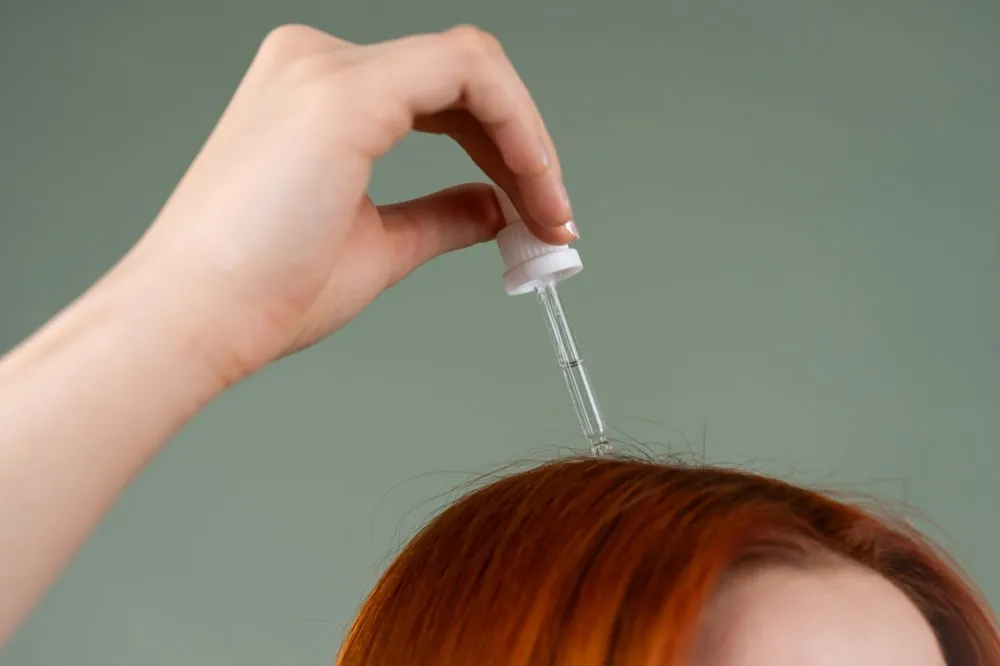
Hair loss is one of the most common reasons people come to my office — and one of the most distressing for patients, especially women. The good news is that, when it's diagnosed correctly and early, most types of alopecia have effective treatments. The key is identifying the cause.
How much hair loss is normal?
It's completely normal to lose 50 to 100 hairs a day. Hair has natural cycles of growth, rest and shedding. When you lose more than that, or lose hair in specific patterns, we call it alopecia.
The most common types of alopecia
Androgenetic alopecia (pattern hair loss)
This is the most common type. In men it causes the typical receding temples and thinning at the crown; in women it shows up as diffuse thinning in the central area and along the part, without the frontal hairline receding. It has a strong genetic basis and is aggravated by hormonal factors.
Effective treatments: topical or oral minoxidil, finasteride (in men), dutasteride, scalp PRP, mesotherapy with specific actives.
Telogen effluvium
This is acute, diffuse and usually temporary shedding that occurs 2–4 months after a stressful event for the body: childbirth (very common), severe stress, rapid weight loss, surgery, serious illness or nutritional deficiencies. Hair falls out in larger clumps than usual.
Treatments: in most cases, once the underlying cause is resolved, the hair recovers on its own within 3–6 months. Nutritional supplements and local treatments such as mesotherapy speed up recovery.
Alopecia areata
An autoimmune disease in which the immune system attacks the hair follicles, producing round or oval bald patches. It can affect the scalp, beard, eyebrows or any hairy area. In severe cases it can be total (alopecia totalis).
Treatments: intralesional corticosteroids, immunomodulators, JAK inhibitors (newer treatments with very good results in moderate-to-severe cases).
Scarring alopecias
These are the least common but the most important to diagnose early, because they permanently destroy the follicle. They include lichen planopilaris, discoid lupus and frontal fibrosing alopecia. A biopsy is needed for a definitive diagnosis.
In-office treatments
Scalp PRP (Platelet-Rich Plasma)
PRP is one of the most effective and best-documented treatments for androgenetic alopecia and telogen effluvium. A small blood sample is taken from the patient, centrifuged to concentrate the platelets, and the enriched plasma is injected into the scalp.
Platelets contain growth factors that stimulate the hair follicles, improve local circulation and prolong the hair's growth phase.
Typical protocol: 3–4 monthly sessions to start, then maintenance every 4–6 months.
Does it hurt? Topical anesthesia is applied beforehand. The discomfort is tolerable.
Results: evaluated after 3–6 months. It's not immediate, but the results are lasting.
Scalp mesotherapy
This involves injecting micro-droplets of a cocktail of actives directly into the scalp: B vitamins, amino acids, minoxidil, biotin, zinc and organic silicon, among others. The advantage of mesotherapy is that the actives reach the follicle directly, at much higher concentrations than can be achieved orally or topically.
Main indications: mild-to-moderate androgenetic alopecia, telogen effluvium, preventive maintenance, and in combination with PRP.
Protocol: 1 session weekly or every two weeks for 2–3 months, then monthly maintenance.
Scalp exosomes
These are the newest frontier in alopecia treatment. Exosomes are extracellular vesicles containing growth factors, mRNA and other bioactive molecules that regulate cell behavior. They are obtained from mesenchymal stem cells and injected into the scalp.
Preliminary evidence is very promising, especially in combination with scalp microneedling (Dermapen on the scalp). In some patients we are seeing stronger results than with PRP.
At-home treatments
Minoxidil
This is the only FDA-approved topical treatment for alopecia. It comes as a solution (2% and 5%) and as a foam. Its mechanism isn't fully understood, but it prolongs the follicle's growth phase and improves local circulation. It is applied directly to the scalp.
Important: it takes 3–6 months to see an effect. At first there may be temporary shedding, which is normal and passes. If you stop using it, the effect disappears. There is also an oral form (low-dose oral minoxidil), with better adherence and comparable or better results.
Nutritional supplements
Deficiencies in iron, zinc, vitamin D, biotin and protein can contribute to hair loss. Before supplementing, it's essential to measure your actual blood levels — too much of some nutrients can also be counterproductive.
Hair-specific supplements (Viviscal, Nutrafol, Belcapil, among others) have variable evidence. They can be a useful complement, but they don't replace medical treatment in established alopecia.
When should you see a dermatologist?
See a dermatologist if:
- The shedding has lasted more than 3 months and there's no obvious cause
- You notice thinning along your part or at your temples
- Bald patches appear (possible alopecia areata)
- There's itching, burning or scaling on the scalp (possible scarring alopecia)
- Hair loss is causing you significant distress
Early diagnosis is essential, especially in scarring alopecias, where follicular tissue can be lost irreversibly.
Worried about hair loss? In my office I do a complete scalp evaluation — including trichoscopy — to determine the cause and the best treatment plan. Book your appointment with Dr. Alejandra Téllez in Bogotá.
