Dark Spots on the Face: Causes, Types and Effective Treatments
Melasma, sun spots, post-inflammatory hyperpigmentation: learn how to tell them apart and which treatments work best. Dr. Alejandra Téllez, Bogotá.
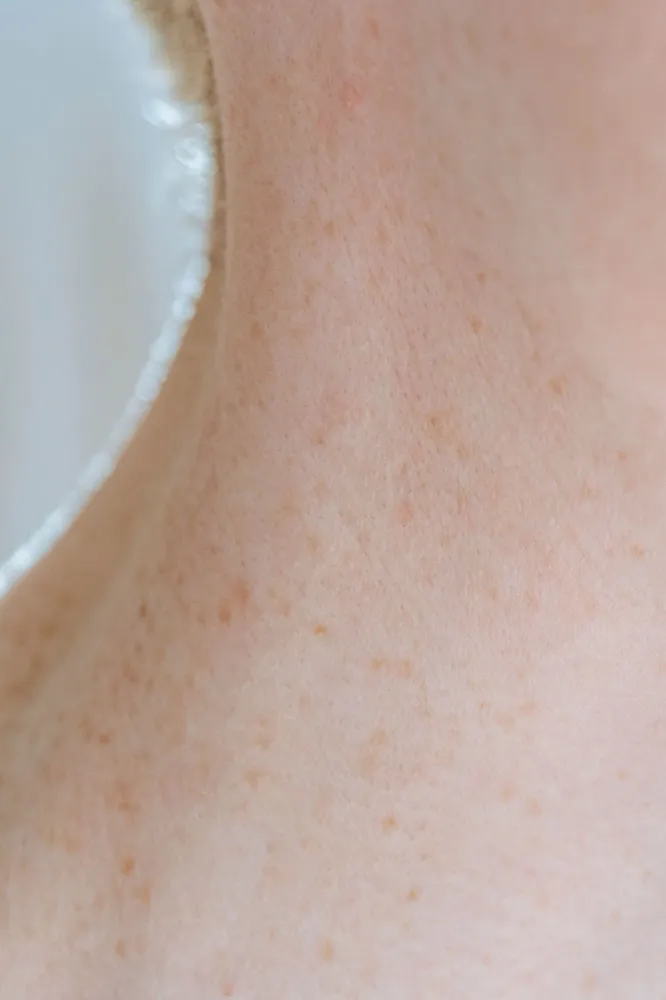
Dark spots on the skin are one of the most common concerns I see in my office. They are also one of the most frustrating for patients: many people spend years using creams without seeing real results, without knowing that you first need to identify what type of spot you have. Not all spots are treated the same way.
Why do dark spots appear?
Skin pigmentation depends on melanocytes, the cells that produce melanin. When they become overactive or act irregularly, spots appear. Triggers include:
- Sun: the most common cause. UV radiation directly stimulates melanin production
- Hormones: pregnancy, oral contraceptives and hormonal treatments can cause melasma
- Inflammation: acne, chafing, bumps and any wound can leave spots (post-inflammatory hyperpigmentation)
- Medications: some antibiotics, antimalarials and antiepileptics can cause spots
- Diseases: hypothyroidism, Addison's disease and other systemic conditions can also show up as changes in pigmentation
Types of spots and how to identify them
Melasma
This is the hardest type to treat. It appears as symmetrical light-to-dark brown patches on the forehead, cheeks, upper lip and chin. It mainly affects women and is caused by a combination of genetic predisposition, sun exposure and hormonal factors.
Melasma can't be cured, but it can be controlled. Without rigorous sun protection, any treatment will fail.
Sun spots (solar lentigines)
These are flat, well-defined spots of uniform brown color that appear on sun-exposed areas: face, hands, chest. They become more common with age and in fair skin. Unlike melasma, they respond better to depigmenting treatments and lasers.
Post-inflammatory hyperpigmentation (PIH)
These are the marks left after an acne breakout, a mild burn, an insect bite or any inflammatory process in the skin. They tend to be darker in olive or dark skin. With time and sun protection they can fade on their own, but treatment speeds up the process significantly.
Freckles (ephelides)
These are small, light spots that appear in childhood and fade in winter. They are genetic and don't require medical treatment, though they can be treated if a person wishes to lighten them for cosmetic reasons.
Spots caused by medications or systemic disease
These require a medical evaluation and treatment of the underlying cause.
Available treatments
Sun protection: the non-negotiable step
No treatment works without daily sun protection. I recommend broad-spectrum (UVA/UVB) SPF 50+, reapplied every 2–3 hours during direct exposure. Without it, the spots come back.
Topical depigmenting agents
- Hydroquinone: the historical standard. Effective, but requires breaks to avoid a rebound effect
- Kojic acid, tranexamic acid, niacinamide: gentler alternatives, used alone or in combination
- Retinoids: improve cell turnover and boost other actives
Cosmelan (professional depigmentation)
This is the most effective depigmentation system currently available for melasma. It combines a high-concentration depigmenting mask applied in the office with at-home maintenance. Results are noticeable from the first week, with progressive improvement up to 3–6 months.
Who is a good candidate? People with moderate to severe melasma, multiple sun spots, or extensive PIH that hasn't responded to conventional treatments.
Chemical peels
Glycolic, mandelic or TCA peels at controlled concentrations speed up cell turnover and improve pigmentation. They are especially useful for superficial spots and post-acne PIH.
Laser and intense pulsed light (IPL)
Q-switched lasers and IPL are very effective for sun spots and freckles. With melasma, more caution is needed, as heat can worsen pigmentation if the device and settings aren't chosen carefully.
Microneedling with depigmenting actives
Microneedling creates microchannels in the skin that improve the absorption of depigmenting actives applied at the same time. It is a good complementary option for skin with diffuse spots.
How long does it take to see results?
The skin renews itself in a cycle of about 28 days. Depigmenting treatments work over that cycle, so results are evaluated after 2–3 months. Consistency is key: there is no instant treatment for dark spots.
What not to do
- Squeeze pimples: it leaves darker marks (PIH)
- Stop using sunscreen once you see improvement: the spots come back
- Buy depigmenting creams without a prescription: some are ineffective; others, containing hydroquinone without medical supervision, can cause unwanted effects
- Get laser treatments without a diagnosis: the wrong laser can make melasma worse
Each type of spot requires a different approach. During the consultation I evaluate the type of pigmentation, your skin phototype and the triggers to design a plan that truly works. Book your appointment with Dr. Alejandra Téllez in Bogotá.
