Types of Acne and How to Treat Them: A Complete Guide
Learn to identify the different types of acne and the most effective treatments for each case. A guide written by Dr. Alejandra Téllez, dermatologist in Bogotá.
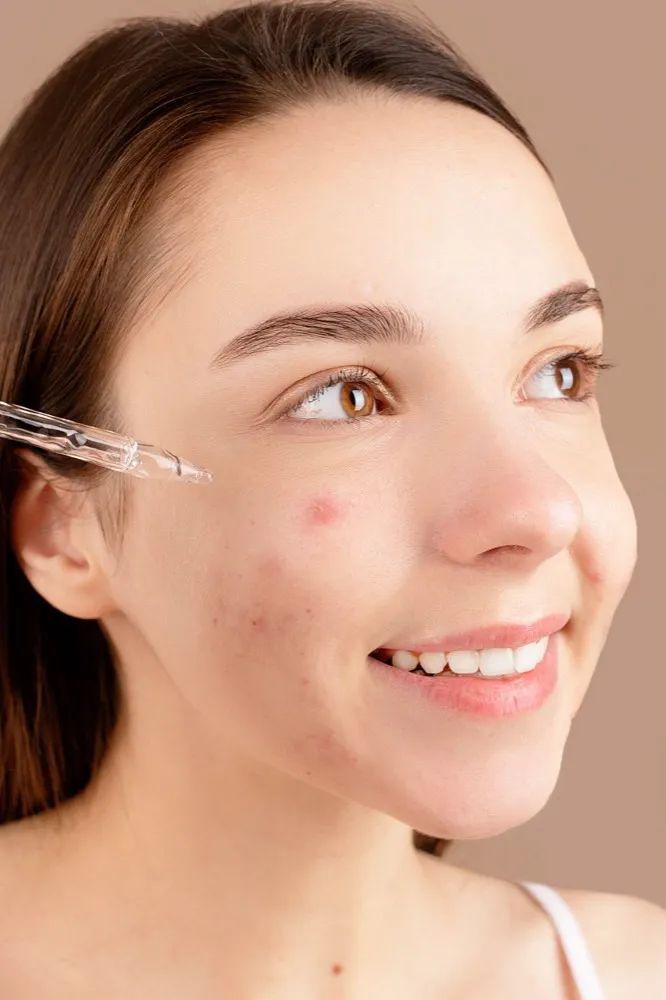
Acne is the most common skin disease in the world. Although it mainly affects teenagers, it can appear at any age and has a significant impact on quality of life and self-esteem. Understanding what type of acne you have is the first step to choosing the right treatment.
What is acne?
Acne is inflammation of the pilosebaceous follicle (the canal where hair grows) caused by a combination of three main factors:
- Excess production of sebum (oil) by the sebaceous glands
- Clogging of the follicle by dead cells (follicular hyperkeratosis)
- Overgrowth of the bacterium Cutibacterium acnes (formerly called Propionibacterium acnes)
Hormonal, genetic and dietary factors, as well as stress, can modulate these three components and make acne worse.
Types of acne by lesion
Non-inflammatory (comedonal) acne
This is the mildest type. It is characterized by:
- Blackheads (open comedones): the follicle is blocked and the sebum oxidizes on contact with air, turning black
- Whiteheads (closed comedones): the follicle is completely blocked with no contact with air
This type of acne responds well to topical retinoids (adapalene, tretinoin) and salicylic acid.
Mild to moderate inflammatory acne
This includes:
- Papules: red, raised lesions without pus
- Pustules: lesions with visible pus inside (typical "pimples")
It requires topical treatment with benzoyl peroxide, topical antibiotics (clindamycin) and/or retinoids. In moderate cases an oral antibiotic may be needed.
Severe (nodulocystic) acne
This is the most serious type:
- Nodules: deep, painful lesions without surface pus
- Cysts: encapsulated, pus-filled lesions that can leave significant scars
This type always requires dermatological care. The treatment of choice is isotretinoin (Accutane), under strict medical supervision.
Acne conglobata
A very severe form with multiple interconnected cysts, nodules and tracts under the skin. It requires specialized treatment and close follow-up.
Acne by age
Neonatal and infant acne
It affects 20% of newborns. It is benign and resolves on its own within weeks.
Teenage acne
The most common. The hormonal changes of puberty are the main trigger. It can be mild, moderate or severe.
Adult acne
It mainly affects women over 25. It often has a hormonal component related to the menstrual cycle, contraceptives or polycystic ovary syndrome (PCOS). It tends to appear around the jawline and chin.
When should you see a dermatologist?
You should see a dermatologist if:
- Your acne is moderate or severe
- You've tried over-the-counter products with no improvement in 8–12 weeks
- Your acne is leaving scars
- Acne affects your self-esteem or quality of life
- You have acne in atypical areas (back, chest, buttocks)
- Your acne is mainly on the jawline (possible hormonal component)
What treatments are available?
The treatment plan depends on the type and severity of the acne. A consultation with Dr. Téllez may include:
Topical treatments:
- Retinoids (adapalene, tretinoin)
- Benzoyl peroxide
- Salicylic acid
- Topical antibiotics (clindamycin)
- Azelaic acid
Systemic treatments:
- Oral antibiotics (tetracyclines, erythromycin)
- Oral contraceptives (in women with hormonal acne)
- Spironolactone (anti-androgen)
- Isotretinoin (for severe acne)
In-office procedures:
- Chemical peels (glycolic, salicylic, mandelic acid)
- Professional comedone extraction
- Phototherapy
- CO2 laser for scars
Common acne myths
"Acne comes from not washing your face properly" → FALSE. Acne is not caused by poor hygiene, although over-washing can irritate the skin and make it worse.
"Chocolate causes acne" → The evidence is mixed. Some studies suggest that high-glycemic diets and dairy can worsen acne, but not chocolate on its own.
"The sun improves acne" → FALSE. A tan temporarily hides lesions, but sun damage can worsen post-acne marks and acne itself in the long run.
"Acne goes away on its own with time" → Untreated moderate-to-severe acne leaves permanent scars. Early treatment prevents irreversible damage.
This article is for educational purposes. For a personalized diagnosis and treatment plan, book a consultation with Dr. Alejandra Téllez in Bogotá.
