Androgenetic Alopecia: Causes, Diagnosis and Treatments in 2024
Is your hair falling out? Learn about androgenetic alopecia (pattern hair loss), how it's diagnosed and the most effective treatments available in Bogotá.
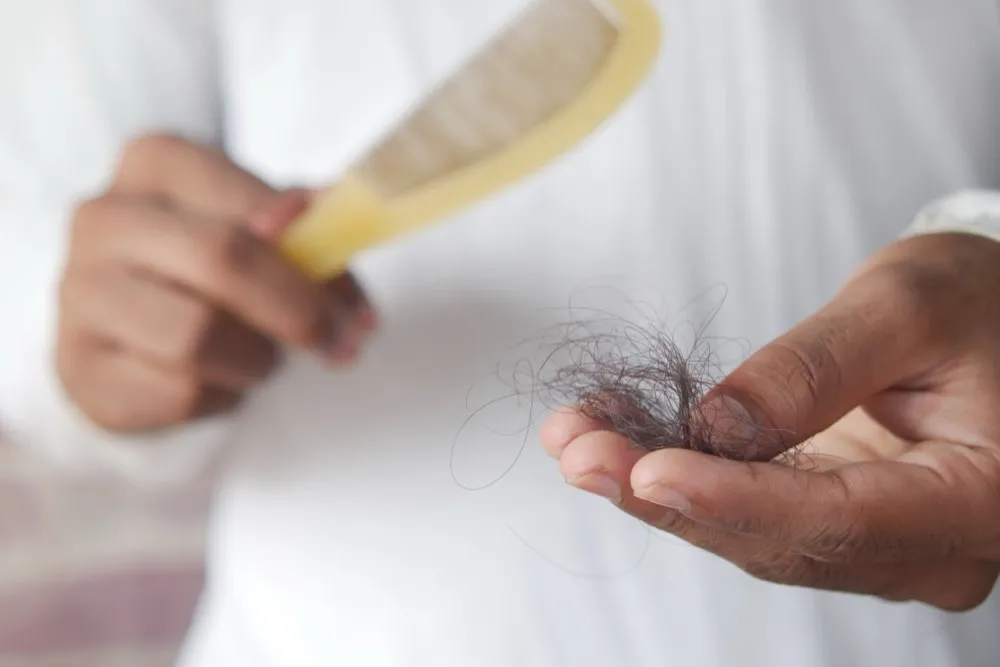
Androgenetic alopecia (also called pattern baldness) is the most common cause of hair loss in both men and women. Although the name may sound intimidating, today there is a range of effective treatments that can stop its progression and even regrow lost hair. Early diagnosis is essential.
What is androgenetic alopecia?
It is a progressive hair loss of genetic and hormonal origin that follows a characteristic pattern:
- In men: a receding hairline at the temples and loss at the crown
- In women: diffuse thinning on the top of the scalp, with the frontal hairline preserved
The cause is the sensitivity of hair follicles to androgens (mainly dihydrotestosterone, DHT). DHT causes the follicle to shrink progressively (miniaturize) until it stops producing terminal hair.
Why is it important to see a doctor early?
A miniaturizing hair follicle can recover with treatment if it is still alive. However, once the follicle dies, the only way to recover hair in that area is a hair transplant. That's why early treatment is key.
Dr. Téllez uses trichoscopy (dermoscopy of the scalp) to assess the state of the follicles and determine what percentage can be recovered.
How much hair loss per day is normal?
It's normal to lose between 50 and 100 hairs a day. If you notice more hair than usual on your pillow, in the shower drain or in your brush, it's time to see a doctor.
Diagnosing androgenetic alopecia
The diagnosis is mainly clinical, but Dr. Téllez may complement it with:
- Trichoscopy: shows the state of the follicle with a dermatoscope
- Standardized photography: for objective follow-up of the treatment
- Lab tests: if a secondary cause is suspected (iron deficiency, hypothyroidism, nutritional deficiencies)
- Pull test: assesses how active the shedding is
Available treatments
1. Minoxidil
This is the most widely used topical treatment, with the strongest scientific evidence. It is available as a 2% and 5% solution and foam.
- Mechanism: prolongs the hair's growth phase (anagen) and increases follicle diameter
- Results: seen after 3 to 6 months of continuous use
- Key consideration: treatment must be continued indefinitely; if you stop, the effect is lost
2. Finasteride / Dutasteride (in men)
These are 5-alpha reductase inhibitors, blocking the enzyme that converts testosterone into DHT. They are only indicated in men.
- Finasteride 1 mg/day: reduces DHT in the scalp by 60–70%
- Dutasteride: more potent, reduces DHT by a greater percentage
- They require medical follow-up and are not used in women of childbearing age
3. Spironolactone (in women)
A systemic anti-androgen indicated for women with androgenetic alopecia and an altered hormonal profile. It requires medical monitoring.
4. Scalp PRP (Platelet-Rich Plasma)
A procedure that uses the patient's own blood to obtain plasma enriched with growth factors, which is then injected into the scalp. Its benefits:
- Stimulates follicles that are miniaturizing
- Prolongs the growth phase
- Increases the thickness of the hair shaft
- No risk of allergic reactions (it's your own blood)
It is an excellent complement to drug treatment. It is done in series of 3–4 sessions.
5. Scalp mesotherapy
Injection of vitamins, minerals and amino acids into the scalp to nourish the follicles. It is a useful adjunct, especially when there are nutritional deficiencies.
6. Low-level laser therapy (LLLT)
Home-use devices (laser helmets or combs) that stimulate the follicles through photobiomodulation. They are useful as a complement to medical treatment.
Does a hair transplant work?
A hair transplant is the option when alopecia is advanced and the follicles in the affected area can no longer be recovered. It involves moving follicles from resistant areas (the back of the head) to the areas with hair loss. It is a permanent procedure, but medical treatment must be continued to prevent progression in the non-transplanted areas.
Hair loss myths
"Baldness is only inherited from your mother's side" → FALSE. Inheritance is polygenic and can come from either side of the family.
"Wearing a cap or hat causes baldness" → FALSE. There is no scientific evidence to support this.
"Stress causes permanent baldness" → Stress can cause telogen effluvium (temporary, diffuse shedding), but not androgenetic alopecia. It can, however, trigger episodes in people who are predisposed.
"Anti-hair-loss shampoos stop baldness" → They only have mild cosmetic effects. Medical treatment is essential for androgenetic alopecia.
If you notice your hair is thinning or shedding has increased, book a trichology consultation with Dr. Alejandra Téllez in Bogotá.
