Chemical Peels: What They Are, Types and What to Expect
Everything about chemical peels: types (superficial, medium, deep), what they're for, what happens afterwards and how to prepare. Dr. Alejandra Téllez, Bogotá.
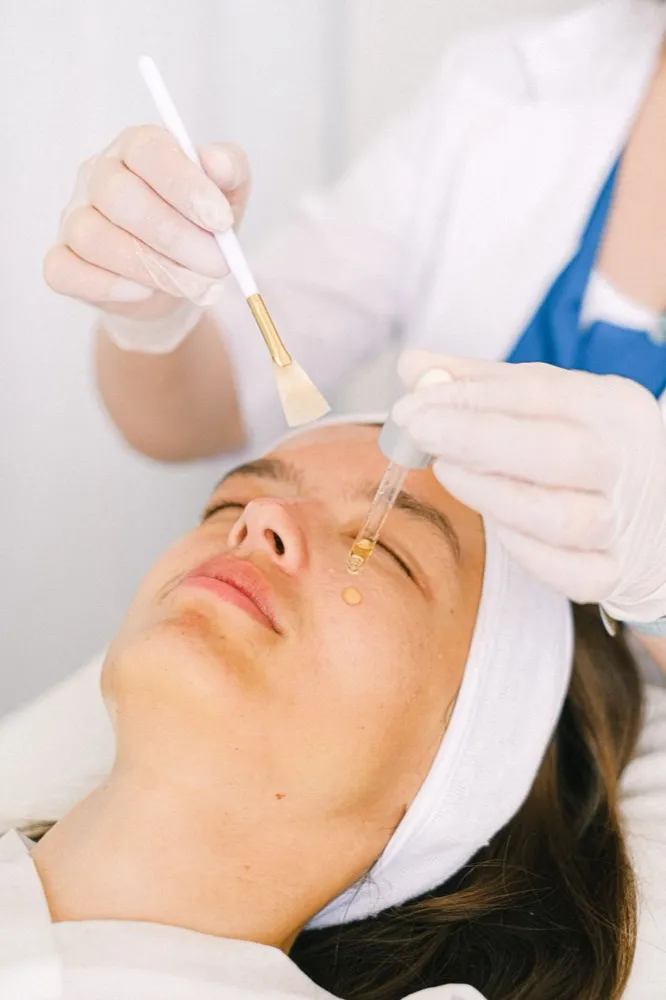
The chemical peel is one of the oldest procedures in aesthetic dermatology — and it is still one of the most effective. The reason is simple: cell renewal is one of the most powerful mechanisms the skin has to recover. A peel speeds up that process in a controlled way.
What is a chemical peel?
A chemical peel involves applying an acid solution to the skin to produce controlled exfoliation of the outer layers. As these layers are removed, the skin responds by generating new, more even cells with better texture and less irregular pigmentation.
Results depend on the depth of the peel, the type of acid used and the concentration.
Types of peels by depth
Superficial
Works on the epidermis (the outermost layer). It is the gentlest, with practically no downtime. It can be done with:
- Glycolic acid (10–70%): improves texture, radiance and superficial spots
- Mandelic acid (20–40%): excellent for combination or oily skin, well tolerated in higher phototypes
- Salicylic acid (20–30%): ideal for acne-prone skin, unclogs pores
- Lactic acid: moisturizing and exfoliating, good for dry skin
It can be done every 2–4 weeks in cycles of 4–6 sessions.
Medium
Reaches the upper dermis. It produces visible peeling for 5–7 days. The most commonly used:
- TCA (trichloroacetic acid) at 20–35%: very effective for sun spots, mild-to-moderate melasma, fine lines and uneven texture
- Combinations (Jessner + TCA, among others)
It requires preparing the skin beforehand (using retinoids and depigmenting agents in the preceding weeks).
Deep
Works in the mid dermis. It is the most powerful, with the longest recovery (10–14 days or more). It is used for:
- Moderate-to-deep wrinkles
- Severe acne scars
- Advanced sun damage
It requires anesthesia and a strict protocol. It is not performed on higher phototypes because of the risk of hyperpigmentation.
What is a peel used for?
Depending on the type chosen, a peel improves:
- Dark spots: sun spots, mild melasma, post-acne hyperpigmentation
- Texture: enlarged pores, rough skin, superficial scars
- Active acne: reduces inflammatory lesions and unclogs pores
- Radiance: the skin looks more even and glowing
- Fine lines: especially around the mouth and eyes
- Acne scars: improves the appearance of superficial scars
Preparing for a peel
For superficial peels, preparation is minimal. For medium and deep peels, I usually prescribe:
- Topical retinoids for 2–4 weeks beforehand (to even out cell turnover)
- Depigmenting agents if there are spots (hydroquinone, kojic acid) to reduce the risk of post-peel hyperpigmentation
- Strict sun protection
- Stopping certain photosensitizing medications
What happens during and after the procedure?
During
The acid is applied to the skin with gauze or a brush. A burning or warm sensation is normal and can last 5 to 20 minutes. The intensity varies with the type of peel.
The first few days
Depending on the depth:
- Superficial: slightly red or tight skin. No visible peeling, or very fine flaking. You can wear makeup the next day.
- Medium: significant redness on day 1, then the skin darkens and starts peeling from day 3 to 7. You can't wear makeup for the first few days. Wear sun-protective clothing.
- Deep: 10–14 days of recovery, with intense peeling and frequent medical check-ups.
Post-peel care
- Plenty of moisturizer (petroleum jelly or a fragrance-free cream)
- Never pull off peeling skin — it increases the risk of scars and dark spots
- SPF 50+ is mandatory, with no direct sun exposure for at least 4 weeks
- No intense physical activity for 48–72 hours
- No saunas or hot tubs for 1 week
When are results visible?
Superficial peels show progressive improvement with each session. After the peeling phase of a medium peel (between the first and second week), the new skin looks noticeably brighter, more even and with fewer spots. Results keep improving over time as collagen production is completed.
Who should NOT have a peel?
- Pregnant or breastfeeding women
- Skin with an active infection (active cold sore, impetigo)
- Current treatment with oral isotretinoin (wait at least 6 months after finishing)
- Allergy to any of the components
- Keloid scars (a tendency to raised scars)
Not sure which type of peel is right for your skin? During the consultation I evaluate your phototype, goals and history to choose the right protocol. Book your appointment with Dr. Alejandra Téllez in Bogotá.
